

TUMOR TYPES AND IMMUNE MICROENVIRONMENT : UNDERSTANDING "HOT" AND "COLD" TUMORS IN CANCER THERAPY
Abstract
Tumor types can be defined based on the presence of immune cells in the tumor microenvironment, a key factor in determining their behavior and response to treatments, especially immunotherapy. Preclinical Contract Research Organizations (CROs) play a crucial role in this research by using murine models to simulate these immune environments and assess therapeutic responses.
Immuno-inflammatory Tumors – (“Hot Tumors”)
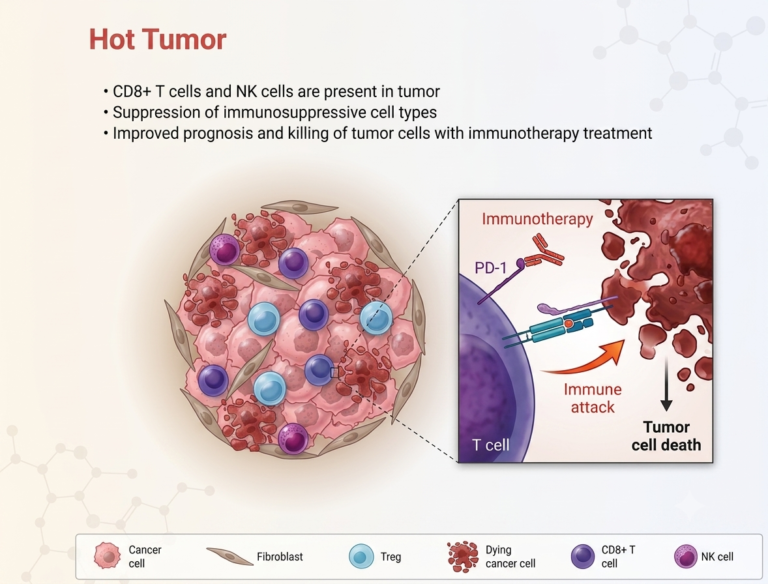
Immuno-inflammatory tumor types, or “hot tumors,” are marked by a high infiltration of immune cells such as CD8+/CD4+ T cells and myeloid lymphocytes. These tumors are highly inflammatory, with elevated IFNγ signaling and a high mutational load. Despite the immune cell presence, tumor growth continues because the immune system is inhibited, often through mechanisms like PD-L1 overexpression. Patients with hot tumors tend to respond better to immunotherapies due to this active immune engagement.
Immuno-excluded Tumors
Immuno-excluded tumor type contain immune cells, but these cells remain confined to the tumor's periphery, unable to penetrate the core. This exclusion occurs due to factors such as abnormal chemokine levels, a hypoxic environment, or a stromal barrier. These obstacles preventT lymphocytes from reaching and destroying tumor cells. Utilizing in vivo models, preclinical CROs are able to mimic these conditions to test interventions aimed at enhancing immune cell infiltration.
Immuno-deprived Tumors – (“Cold Tumors”)
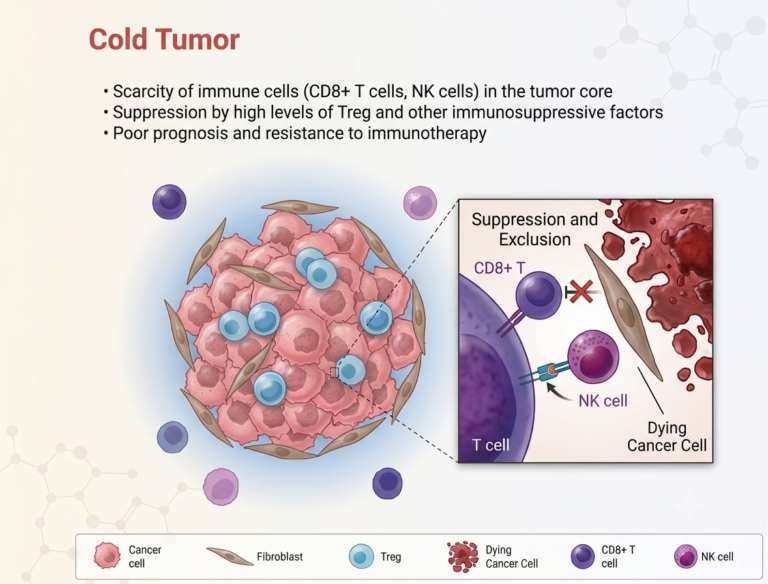
In contrast, immuno-deprived tumor types, often referred to as “cold tumors,” exhibit minimal or no immune cell presence, indicating a lack of immune response. The absence of immune cells can stem from poor antigen presentation, lack of tumor antigens, or the failure of dendritic cells (DCs) to activate T lymphocytes. These cold tumors have low mutational loads and weak responses to immunotherapies. By leveraging murine models, preclinical CROs can investigate ways to stimulate immune responses in cold tumors, offering hope for patients with tumors unresponsive to conventional treatments.
Tumor evasion mechanisms
1) Failure to recognize neo-antigens
Even in hot tumor environments, cancer cells can avoid immune detection by presenting tumor antigens defectively. The downregulation of MHC I molecules is a common evasion strategy, preventing recognition by the immune system. An estimated 40-90% of solid tumors employ this tactic. Tumor cells also secrete cytokines likeTGFβ, IL-10, and IL-6, which suppress DC maturation, rendering them ineffective in activating T lymphocytes. Preclinical models provided by CROs help explore how these immune evasion mechanisms can be disrupted.
2) Mimicking of immunosuppressive mechanism
Tumor cells also mimic immunosuppressive functions to deactivate effector immune cells and recruit immunosuppressive cells.
- Secretion of Immunosuppressive Molecules
Tumor cells secrete molecules such as TGFβ, VEGF, and PGE2, which significantly affect the tumor microenvironment.
VEGF : Promotes blood vessel formation while inhibiting DC maturation and promoting immune checkpoint expression.
TGFβ: Regulates cell growth but can suppress the activity of T lymphocytes, NK cells, and B lymphocytes, promoting tumor growth.
PGE2: Inhibits the proliferation of NK cells and macrophages while fostering the expansion of Tregs and MDSCs.
- Immune Checkpoints
Tumor cells often exploit inhibitory immune checkpoints like PD-1 to escape immune surveillance. These checkpoints are essential for maintaining immune system balance but are hijacked by cancer cells to limit effector cell activation. Targeting these checkpoints has become a central strategy in immunotherapy, and resistant murine models are essential for preclinical testing of these therapies.
Conclusion
Understanding the distinction between hot and cold tumor types, as well as the sophisticated immune evasion mechanisms used by cancer cells, is crucial in developing effective cancer therapies. Preclinical CROs utilizing novel murine models are at the forefront of this research, helping to identify novel approaches to enhance the immune system’s ability to fight cancer. By focusing on reactivating immune responses in cold tumors and targeting the suppressive mechanisms in hot tumors, new cancer treatment avenues are being explored, offering greater hope in the battle against this disease.
Contact our Team to learn more
FAQ
Cancer tumor types are classified according to the presence and distribution of immune cells within their surrounding microenvironment. Inflammatory tumor types feature significant immune cell infiltration, high mutational loads, and strong IFNγ signaling. In contrast, excluded tumor types contain immune populations that are restricted to the tissue periphery by structural or chemical barriers. Deprived tumor types display minimal or no immune presence because of poor antigen presentation or defective T lymphocyte activation. These cellular profiles strongly influence how individual tumor types respond to various medical treatments, particularly modern immunotherapies.
Although immuno-inflammatory tumor types are heavily infiltrated by CD8+/CD4+ T lymphocytes and myeloid cells, malignant growth persists due to local immunosuppressive mechanisms. Inhibitory pathways, such as the overexpression of PD-L1 by cancer cells, are exploited to suppress effector T cell activation. Malignant cells also secrete suppressive molecules, including TGFβ, VEGF, and PGE2, which further impair lymphocyte function. Despite these suppressive conditions, patients affected by hot tumor types generally show improved responses to targeted immunotherapies, as active immune engagement is already established within the tissue.
In immuno-excluded tumor types, T lymphocytes are retained at the outer margin of the lesion and cannot infiltrate the central mass. Physical and chemical obstacles, including dense stromal barriers, abnormal chemokine gradients, and hypoxic tissue zones, prevent functional immune cell entry. Preclinical contract research organizations utilize specialised in vivo models to recreate these restrictive physical conditions. Through these laboratory simulations, novel therapeutic interventions designed to break down outer barriers and enhance deep cellular infiltration into cold tumor types are evaluated.
Immuno-deprived tumor types display a complete lack of immune cell activity, which typically stems from poor antigen presentation or deficient tumor antigen expression. Dendritic cells may fail to mature properly, preventing the activation of effector T lymphocytes. Additionally, these cold tumor types exhibit low mutational burdens, which results in weak baseline recognition by the host immune system. Murine models are employed by researchers to test novel strategies aimed at stimulating immune responses within these unresponsive tumor types.
Tumor cells frequently downregulate surface MHC I molecules, which prevents recognition by cytotoxic T lymphocytes. This specific evasion mechanism is utilised by an estimated 40–90% of solid tumor types. Furthermore, malignant tissue secretes immunosuppressive cytokines, such as TGFβ, IL-10, and IL-6, which inhibit the maturation of dendritic cells. Consequently, naive T lymphocytes are not properly activated against neo-antigens. Preclinical models are implemented to examine methods for disrupting these suppressive evasion signals.
Molecules secreted by tumor cells alter the local microenvironment to suppress anti-tumor immunity. VEGF stimulates vascular development while simultaneously inhibiting dendritic cell maturation and increasing immune checkpoint expression. TGFβ regulates growth pathways but acts to suppress T lymphocytes, NK cells, and B lymphocytes. Additionally, PGE2 hinders the proliferation of NK cells and macrophages while promoting regulatory T cell expansion. These combined chemical signals allow aggressive tumor types to escape destruction by effector immune cells.
Inhibitory immune checkpoints, such as PD-1, are exploited by malignant cells to deactivate infiltrating effector T lymphocytes. Under normal physiological conditions, these checkpoint pathways maintain immune system homeostasis and prevent autoimmunity. However, cancer cells hijack these signaling pathways to switch off activated immune cells within the tissue. Neutralising these inhibitory interactions has become a primary focus of contemporary cancer treatments. Resistant murine models are routinely utilized for testing novel checkpoint-blocking immunotherapies across various tumor types.
Preclinical contract research organizations employ murine models to simulate distinct immune microenvironments observed in human cancers. For cold tumor types, animal models are designed to investigate methods for triggering initial antigen presentation and promoting T lymphocyte recruitment. Interventions aimed at dismantling dense extracellular matrix barriers or correcting abnormal chemokine signaling are systematically assessed. These controlled preclinical studies assist in identifying effective combination therapies prior to clinical testing.
Therapeutic approaches for unresponsive tumor types focus on transforming cold immune microenvironments into active, highly inflammatory states. Strategies include enhancing dendritic cell activation, overcoming MHC I downregulation, and disrupting stromal physical barriers. Furthermore, targeted agents are combined with checkpoint inhibitors to relieve local immunosuppression caused by factors like TGFβ, VEGF, or PGE2. By restoring immune cell entry and effector activation, novel treatment avenues are opened for challenging tumor types.
