

AUTHORS
Morgane Denis, Chloé Grasselly, Pierre-Antoine Choffour, Anne Wierinckx, Doriane Mathé, Kamel Chettab, Anne Tourette, Nolan Talhi, Fabian Birzele, Elsa Kress, Lars Petter Jordheim, Christian Klein, Eva-Laure Matera, Charles Dumontet
INTRODUCTION
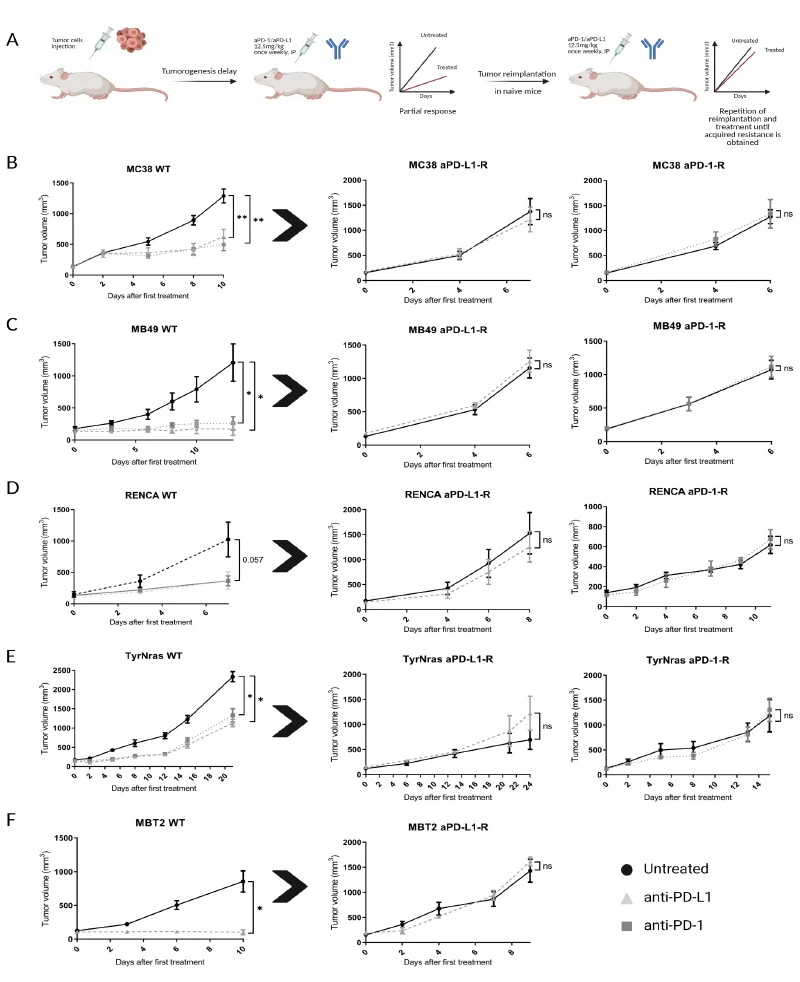
Immune checkpoint inhibitors, such as antibodies directed against PD1 and PDL1 have been shown to produce durable responses in a subset of patients However, many patients either are refractory or ultimately relapse due to acquired PD1/PDL1 resistance. As the underlying mechanisms of this secondary resistance are not well understood, we developed five syngeneic murine tumor models to characterize in vivo variants with acquired resistance to PD 1 and/or PD L 1 antibodies. PD1/PDL1 resistant in vivo models were obtained by serial treatment/ reimplantation cycles in immunocompetent mice bearing MC 38 MB 49 MBT 2 TyrNRas or RENCA tumors.
RESULTS
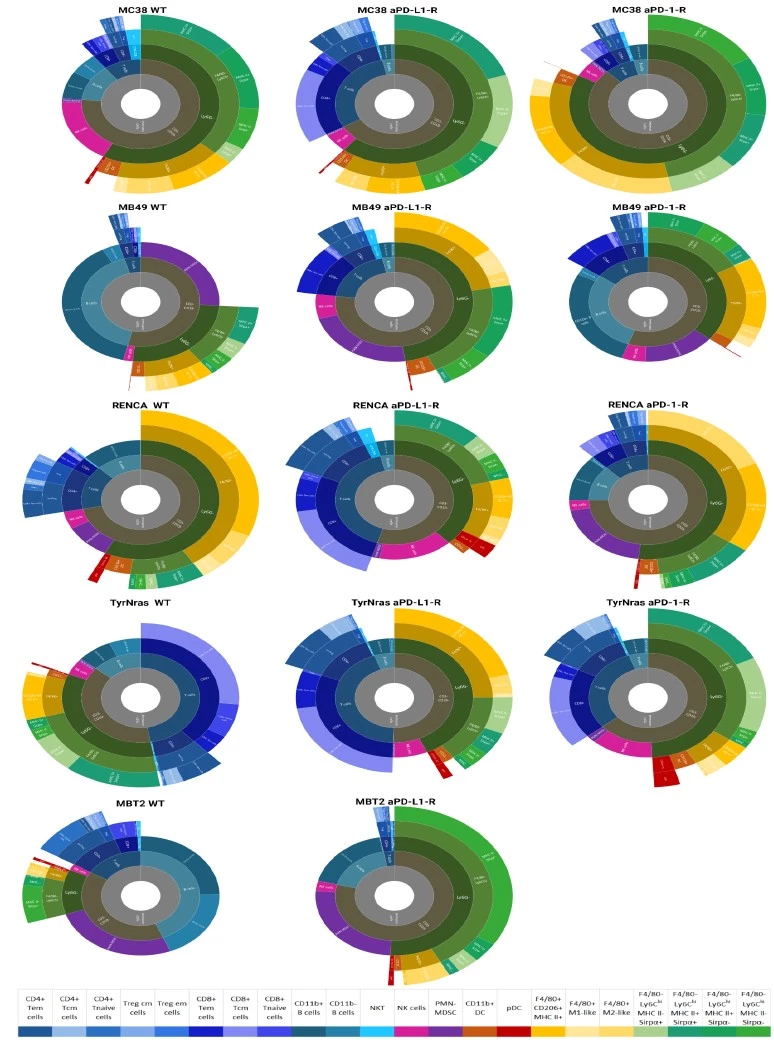
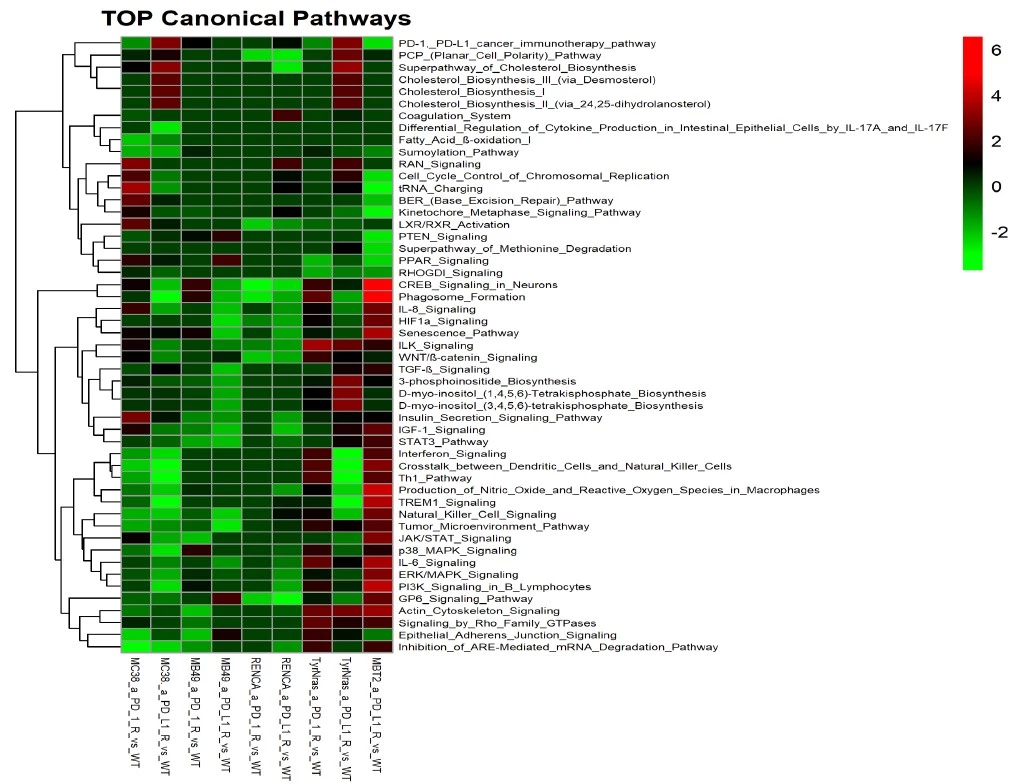
We analyzed the tumor immune microenvironment in sensitive and PD1/PDL1 resistance models by spectral flow cytometry. A panel of 29 markers was applied Each resistant model displayed multiple modifications in the tumor immune infiltrate in comparison to the sensitive model, involving selected lymphoid and/or myeloid subpopulations Moreover, we performed an RNAseq analysis for all models We observed alterations of the pathways already described as being modified in patients with disease progressing under ICI therapy, such as PTEN INFy, PI 3 K AKT or JAK 1 JAK 2 However, this appears to be highly model dependent, reflecting the heterogeneity observed in patient.
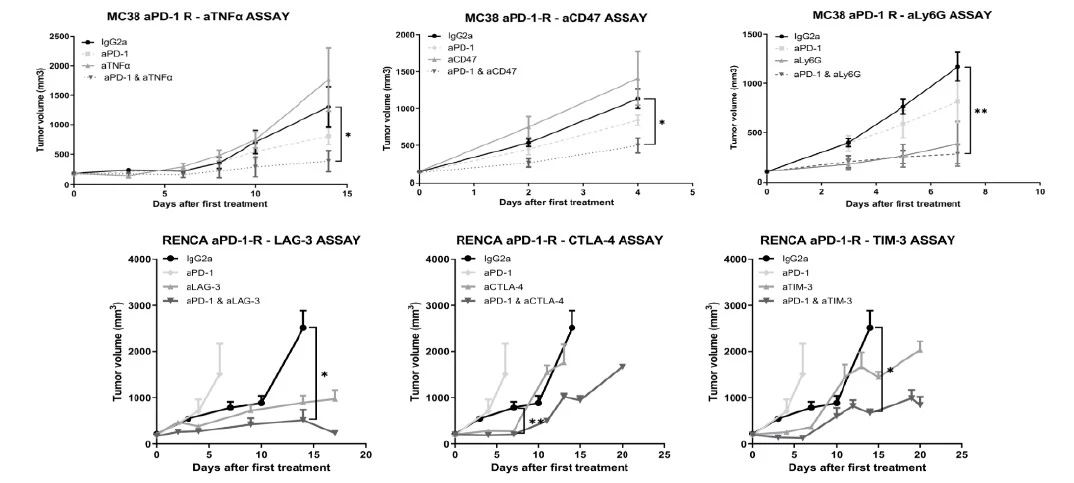
In accordance with the up or down regulation of immune cells we tested therapeutic combination to overcome PD1/PDL1 resistance. All combinations allowed to reverse PD1/PDL1 resistance through immune checkpoint inhibitor and induced a significant delay in tumor growth
CONCLUSION
Acquired in vivo PD1/PDL1 resistant models displayed strong diversity, both in terms of alterations of the tumor immune microenvironment and tumor gene expression profile. These variants may be used to probe the heterogeneity of resistance mechanisms observed in the clinic and contribute to the preclinical evaluation of combination regimens.
PERSPECTIVES
Our model library, which may be enriched in the future with several other variants developed using the same methodology, provides an innovative tool to better apprehend the complexity and diversity of resistance to ICI and test resistance reversal strategies
FIGURE LEGENDS
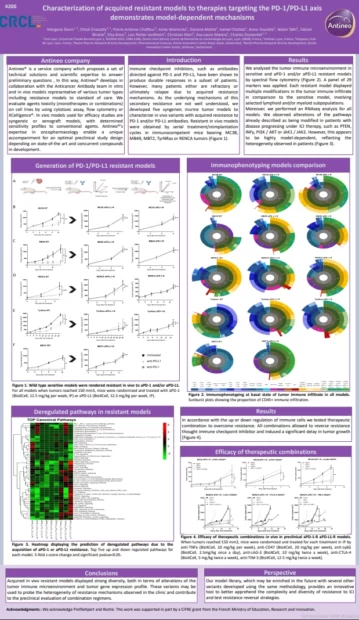
Figure 1: Wild-type sensitive models acquired PD1/PDL1 resistance in vivo process.
For all models when tumors reached 150 mm 3 mice were randomized and treated with aPD1 BioXCell 12 5 mg/kg per week, IP) or aPDL1 BioXCell 12 5 mg/kg per week, IP)
Figure 2: Immunophenotyping at basal state of tumor immune infiltrate in all models. Sunburst plots showing the proportion of CD 45 immune infiltration
Figure 3: Heatmap displaying the prediction of deregulated pathways due to the acquisition of PD1/PDL1 resistance. Top five up and down-regulated pathways for each model 5 fold z score change and significant pvalue<0 05.
Figure 4: Efficacy of therapeutic combinations in vivo in preclinical PD1/PDL1 resistance models. When tumors reached 150 mm 3 mice were randomized and treated for each treatment in IP by anti TNFa BioXCell 10 mg/kg per week), anti CD 47 BioXCell 20 mg/kg per week), anti Ly 6 G BioXCell 2 5 mg/kg once a day), anti LAG 3 BioXCell 10 mg/kg twice a week), anti CTLA 4 BioXCell 5 mg/kg twice a week), anti TIM 3 BioXCell 12 5 mg/kg twice a week)
Contact our Team to learn more
Download the poster here: Poster MD V3 4961_26072022
FAQ
Durable responses are produced in a subset of patients when antibodies directed against PD1 and PDL1 are administered. Relapses occur in many individuals because secondary PD1/PDL1 resistance is acquired during treatment. Refractory disease is also observed in many patients. The underlying mechanisms of this secondary resistance are not well understood by researchers. To address this issue, five syngeneic murine tumour models were created. In vivo variants with acquired PD1/PDL1 resistance were characterized through these models. Experimental systems were required because human patient responses remain varied. Better research tools were established to examine how resistance develops within immunocompetent hosts. Through these preclinical systems, resistance mechanisms can be examined systematically under controlled laboratory conditions.
Acquired PD1/PDL1 resistance was generated through serial treatment and reimplantation cycles in mice. Immunocompetent animals were selected for these experiments to preserve functional immune responses. Treatments were administered repeatedly to mice bearing specific tumour types. Tumours were harvested and reimplanted into new hosts after each treatment cycle. Resistant variants were selected gradually as this process was repeated across multiple generations. Antibodies directed against PD1 or PDL1 were used throughout the treatment protocols. Both single-agent treatments and combination approaches were included in the experimental design. Stable resistant lines were successfully established through this iterative method. Valuable preclinical tools were provided by this approach for subsequent immune profiling and transcriptomic investigations.
Five distinct syngeneic murine tumour cell lines were selected for model development. The panel included MC 38 colon carcinoma and MB 49 urothelial carcinoma models. MBT 2 bladder carcinoma and TyrNRas melanoma lines were also incorporated into the study. RENCA renal cell carcinoma was selected as the fifth tumour model. These lines were chosen to represent diverse cancer types in immunocompetent hosts. Serial passaging was performed in immunocompetent mice for each cell line. Specific patterns of PD1/PDL1 resistance were developed by each individual tumour type. Heterogeneity was successfully maintained across the panel. A broad foundation was provided for comparing resistance mechanisms across different anatomical sites and tissue origins.
The tumour immune microenvironment was evaluated using spectral flow cytometry. Comparisons were made between sensitive parent models and variants with PD1/PDL1 resistance. A comprehensive staining panel comprising 29 distinct markers was applied to single-cell suspensions. Immune cell populations within the tumour tissue were quantified and categorized using this panel. Data were collected from both lymphoid and myeloid lineages. Structural alterations in cellular composition were detected across all evaluated models. High-dimensional single-cell analysis was enabled by the 29-marker antibody panel. Precise measurement of phenotypic shifts was achieved through this approach. Detailed cellular profiles were generated to contrast resistant tumours against their treatment-sensitive counterparts.
Multiple modifications in the tumour immune infiltrate were detected in resistant variants. Changes were identified when comparing resistant models against sensitive controls. Selected lymphoid subpopulations were altered in several resistant models. Shifted balances were also observed within myeloid cell populations. The exact alterations varied according to the specific tumour model analyzed. Both adaptive and innate immune components were affected by the resistance acquisition process. Distinct cellular signatures were generated by different tumour lines under therapeutic pressure. Immune suppression was associated with altered immune cell balances within the local microenvironment. These structural alterations reflected complex interactions between tumour cells and host immune defences during treatment.
RNAseq analysis was performed across all sensitive and resistant tumour models. Gene expression alterations were identified in several cellular pathways previously linked to therapy progression in human patients. Pathway modifications were observed in PTEN signaling and INFy response pathways. Changes were also detected in PI 3 K AKT signaling cascades. Alterations in JAK 1 JAK 2 pathways were recorded during transcriptomic profiling. These specific pathways had been reported previously in clinical studies of disease progression under immune checkpoint inhibitor therapy. Parallels between mouse models and patient observations were confirmed by these genomic findings. Molecular mechanisms driving PD1/PDL1 resistance were clarified through transcriptomic profiling.
Mechanisms of PD1/PDL1 resistance were shown to be highly model dependent. Consistent changes across all five tumour models were not observed in the study. Each model displayed a distinct combination of immune infiltrate modifications and pathway alterations. Heterogeneity observed in cancer patients undergoing therapy was reflected in these preclinical results. Diversity in resistance mechanisms was demonstrated across the different cell lines tested. Unified resistance pathways could not be assigned to all tumour types. Model-specific pathways were activated depending on the original tissue background. Individualized approaches may be required when targeting secondary PD1/PDL1 resistance in clinical settings. Preclinical models must be selected carefully based on specific resistance characteristics.
