
Secondary resistances to treatment is one of the central challenges in oncology. Tumours that initially respond to therapy frequently develop mechanisms to evade or neutralise the therapeutic effect over time, rendering first-line agents ineffective and leaving patients with limited options.
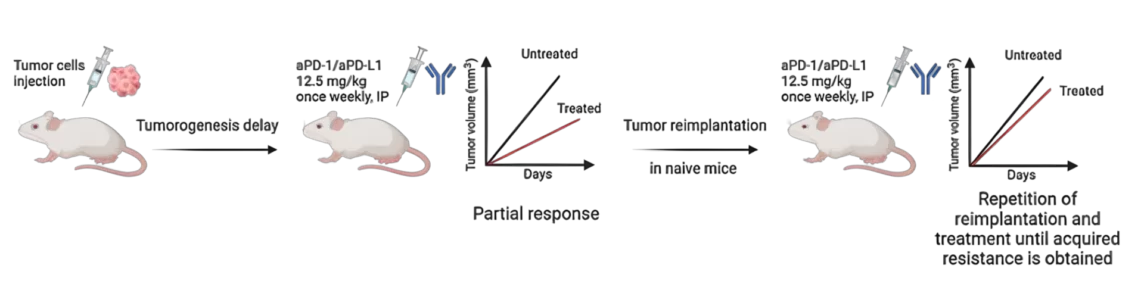
Antineo has developed over 30 original preclinical tumour models specifically designed to reproduce this phenomenon. They are derived from tumours treated repeatedly with immune checkpoint inhibitors under controlled conditions and passaged in vivo under continuous selection pressure. This approach faithfully replicates the biology of clinically acquired resistance: a unique, proprietary asset and a key differentiator of Antineo’s CRO offer.
Our resistant model portfolio
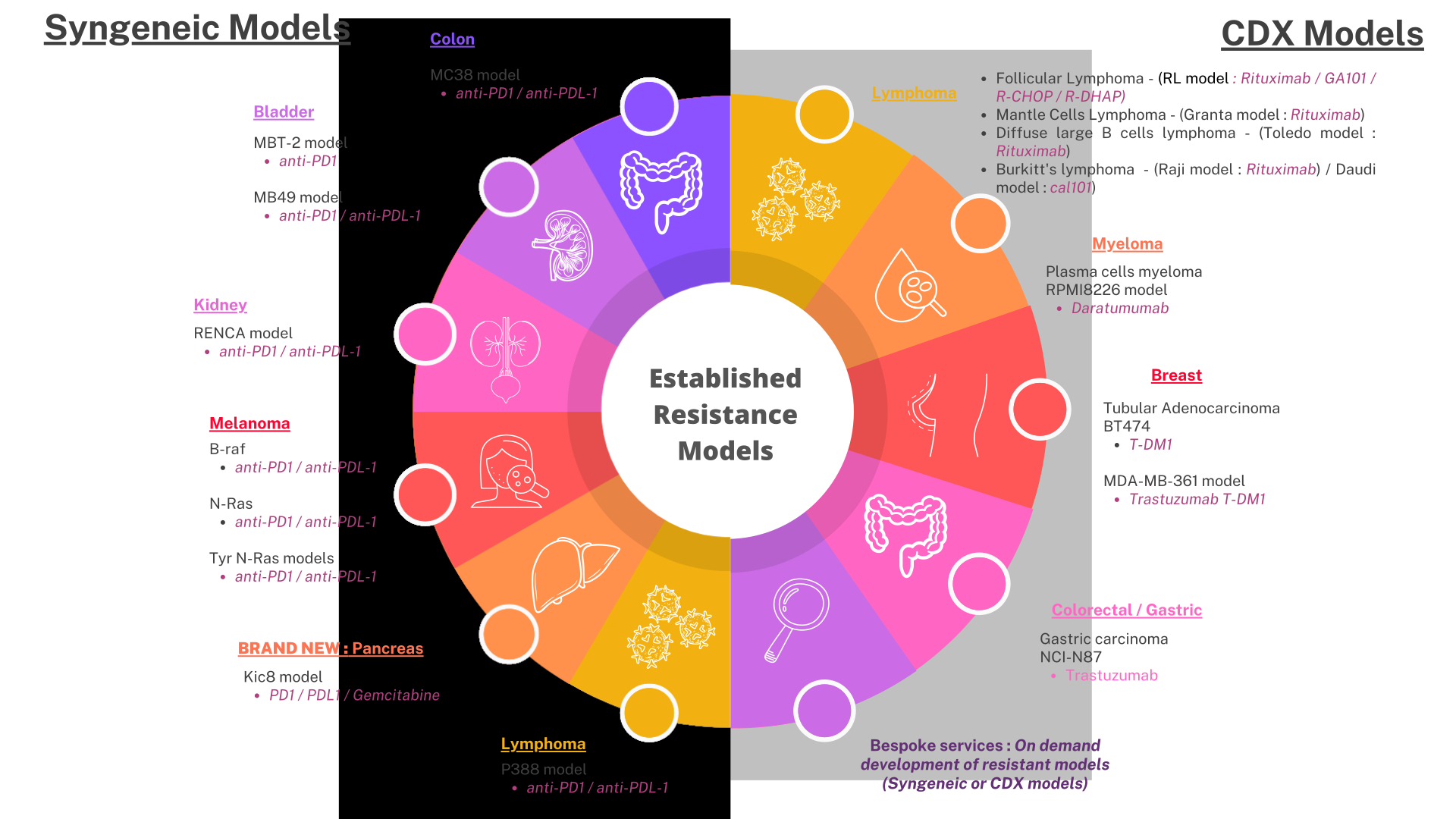
Our collection spans a wide range of both syngeneic and CDX (cell-derived xenograft) models, covering resistance to the most clinically relevant treatment classes:
-
Acquired resistance to anti-PD1/anti-PDL1:
Syngeneic models rendered resistant to immune checkpoint inhibitors through repeated in vivo treatment cycles. These models display stable, heritable resistance maintained under selection pressure and are particularly suited for evaluating next-generation immunotherapies, combination strategies, or agents designed to re-sensitise refractory tumours.
-
Acquired resistance to chemotherapy:
CDX models resistant to standard chemotherapeutic agents including gemcitabine and rituximab. These models enable the preclinical evaluation of compounds targeting resistance mechanisms in haematological malignancies and solid tumours, in settings that mirror second- or later-line clinical contexts.
How we use them
-
Evaluate second-line and salvage therapies
Our resistant models provide a rigorous in vivo benchmark for compounds intended for treatment-refractory indications. Efficacy signals obtained in these models carry strong translational relevance for clinical development in relapsed or resistant patient populations.
-
Investigate resistance reversal strategies
Our models are well suited to testing combination approaches. Pairing a novel agent with a re-sensitising compound or an alternative mechanism of action can generate clear, actionable data on how to overcome acquired resistance in the clinic.
-
Complement primary resistance characterisation
Several of our syngeneic models also display primary resistance to anti-PD-1/PD-L1. Used alongside our acquired resistance models, they allow a comprehensive mapping of resistance phenotypes, from intrinsic non-response to treatment-induced escape.