

AUTHORS
Céline GONGORA, Doriane MATHE, Benoit PINTEUR, Lionel CHALUS, Corinne TORTORELLI, Paul BRAVETTI, Nicolas GADOT, Sylvie LANTUEJOUL, Charles DUMONTET, François GHIRINGHELLI
INTRODUCTION
- Metastatic or resistant colorectal cancer (mCRC) is a major cause of death worldwide.
- Resistant colorectal cancer models (in vivo or in vitro) are critical for the development of innovative drugs that overcomes such resistance
- Unmet medical need in immunotherapy is high for MSS patients and still present for MSI-H/dMMR patients.
- 95% of the mCRC population are treated in first line by FOLFOX or FOLFIRI with limitation due to treatment toxicity.
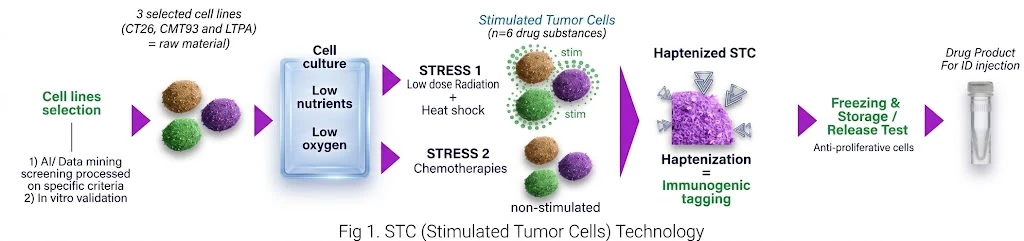
- STC-1010 (Brenus Pharma) therapeutic vaccine is composed to tumor cells stimulation overexpressing tumor associated antigens (TAA) and neoantigens to mimic the treatments resistance of mCRC cancer cells. The aim is to educate the immune system to target patient's tumor cells harboring the same resistance factors.
- We report efficacy results of the murine STC-1010 (mSTC-1010) composed of 6 drug substances (6 CL-SH) vaccine from 3 cell lines (CT26, CMT93 and LTPA cells) S= stimulated by irradiation plus heat shock or by chemotherapies and then haptenized (H). mSTC-1010 was administrated with low dose of immunostimulant (IS=cyclophosphamide and mGM-CSF) associated or not with standard chemotherapies FOLFOX or FOLFIRI.
METHODS
• Immunocompetent female C57BL6 mice were subcutaneously grafted with 1.106 MC38 tumor cells.
• A pre study to find optimal doses of FOLFOX and FOLFIRI on MC38 tumor model has been conducted prior to this study.
• 7 groups (15 mice/ group) were allocated to:
– Control group: vehicles for all treatments
– Group 1: FOLFOX (5FU at 50 mg/kg, oxaliplatin at 3,5 mg/kg, leucoverin at 90 mg/kg all by intra-peritoneal injection to D5, D8 and D11 post-tumour graft)
– Group 2: FOLFIRI (5FU at 50 mg/kg, irinotecan at 30 mg/kg, leucoverin at 90 mg/kg all by intra-peritoneal injection to D5, D8 and D11 post-tumour graft)
– Group 3: 3 CL-SH, stimulated tumor cells only irradiated and heat shocked stimulation without chemotherapy
– Group 4: 6 CL-SH= mSTC-1010, stimulated tumor cells by irradiation, heat-shock and chemotherapy
– Group 5: mSTC-1010 + FOLFOX (5FU at 50 mg/kg, oxaliplatin at 3,5 mg/kg, leucoverin at 90 mg/kg all by intra-peritoneal injection to D5, D8 and D11
– post-tumour graft)
– Group 6: mSTC-1010 + FOLFIRI (5FU at 50 mg/kg, irinotecan at 30 mg/kg, leucoverin at 90 mg/kg all by intra-peritoneal injection to D5, D8 and D11
– post-tumour graft)
Subcutaneous vaccine injections (3CL-SH or 6 CL-SH, both at 1.106 cells/injection, same dose alone or associated to chemotherapy) were associated to IS (subcutaneous GM-CSF at 0,25 mg/kg and intra-peritoneal cyclophosphamide at 15 mg/kg) once a week for 3 weeks.
• Tumor growth (TG) until 1600 mm3 or tumor necrosis and overall survival (OS) were recorded.
• 5 mice per group were euthanized and samples for immunophenotyping.
• We conducted automated immunohistochemical analysis (HALO IndicaLabs software) on 5 tumor groups (n=35) to evaluate the correlation between response and immune population (number of cells / mm²) including: CD3, CD4, CD8, FOXP3 T cells and M1/M2 macrophages response (iNOS/CD163).
RESULTS
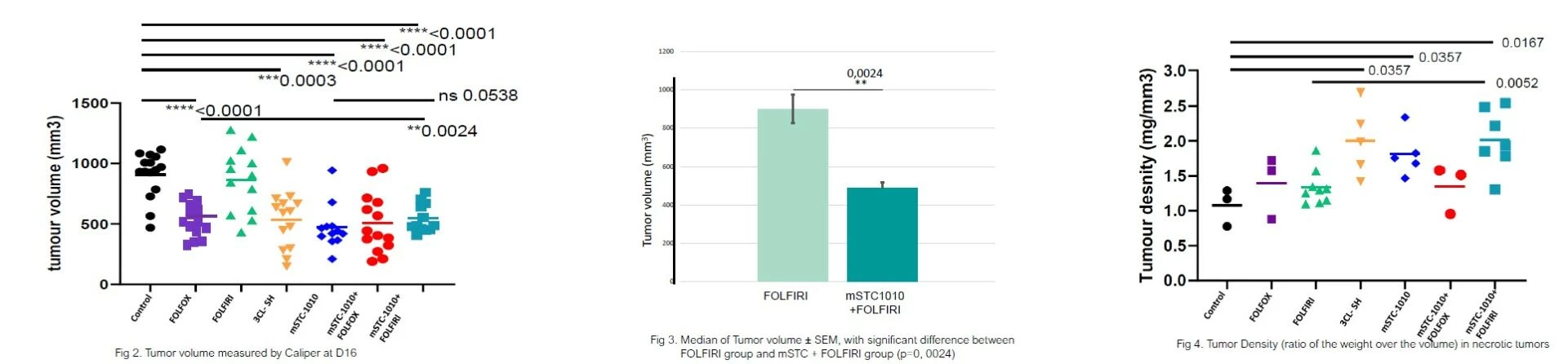
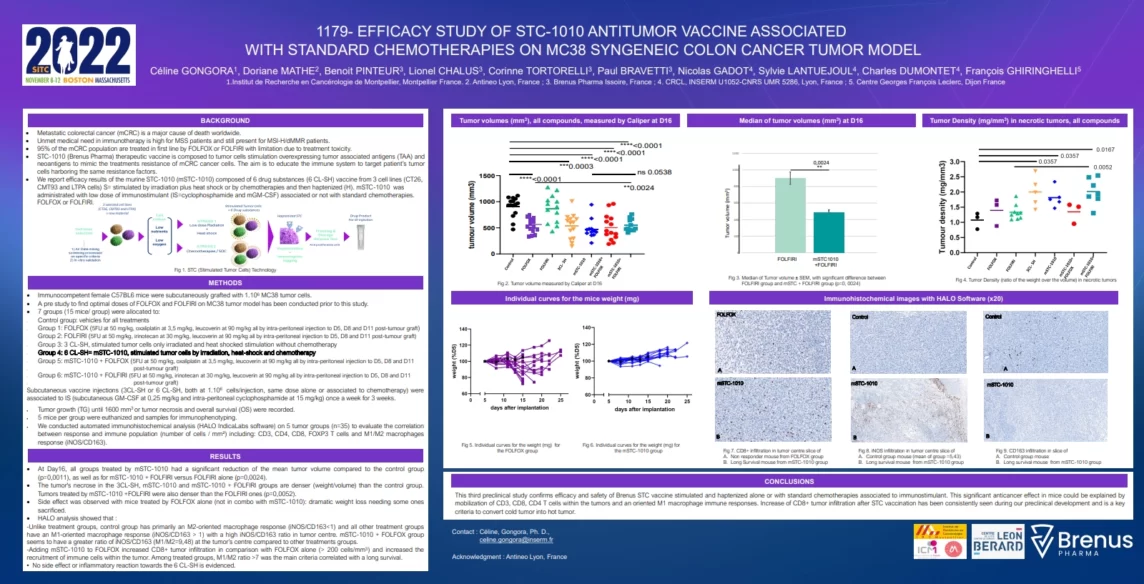
At Day16, all groups treated by mSTC-1010 had a significant reduction of the mean tumor volume compared to the control group (p=0,0011), as well as for mSTC-1010 + FOLFIRI versus FOLFIRI alone (p=0,0024).
• The tumor’s necrose in the 3CL-SH, mSTC-1010 and mSTC-1010 + FOLFIRI groups are denser (weight/volume) than the control group. Tumors treated by mSTC-1010 +FOLFIRI were also denser than the FOLFIRI ones (p=0,0052).
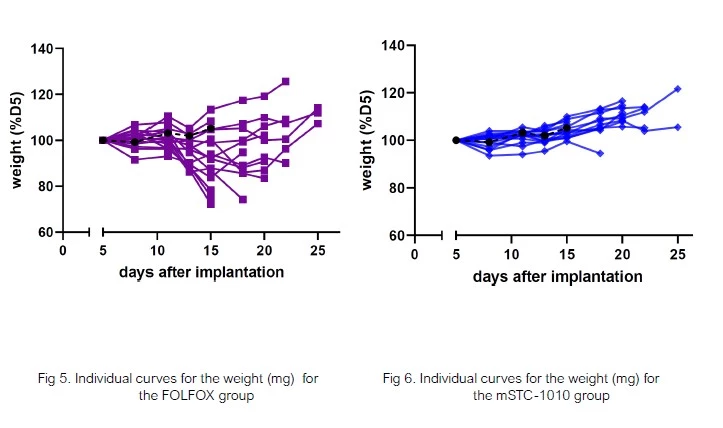
• Side effect was observed with mice treated by FOLFOX alone (not in combo with mSTC-1010): dramatic weight loss needing some ones sacrificed.
HALO analysis showed that :
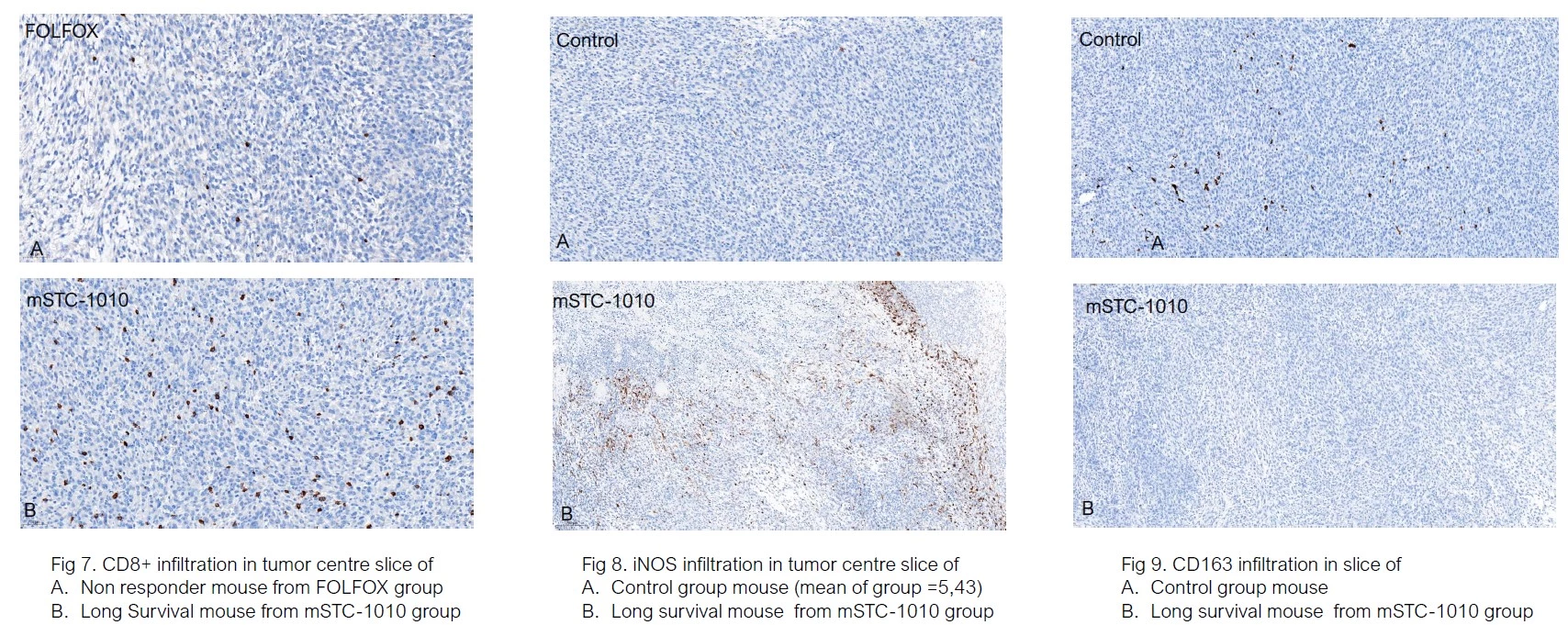
-Unlike treatment groups, control group has primarily an M2-oriented macrophage response (iNOS/CD163<1) and all other treatment groups have an M1-oriented macrophage response (iNOS/CD163 > 1) with a high iNOS/CD163 ratio in tumor centre. mSTC-1010 + FOLFOX group seems to have a greater ratio of iNOS/CD163 (M1/M2=9,48) at the tumor's centre compared to other treatments groups.
-Adding mSTC-1010 to FOLFOX increased CD8+ tumor infiltration in comparison with FOLFOX alone (> 200 cells/mm3) and increased the recruitment of immune cells within the tumor. Among treated groups, M1/M2 ratio >7 was the main criteria correlated with a long survival.
• No side effect or inflammatory reaction towards the 6 CL-SH is evidenced.
CONCLUSION
This third preclinical study confirms efficacy and safety of Brenus STC vaccine stimulated and haptenized alone or with standard chemotherapies associated to immunostimulant. This significant anticancer effect in mice could be explained by mobilization of CD3, CD8, CD4 T cells within the tumors and an oriented M1 macrophage immune responses. Increase of CD8+ tumor infiltration after STC vaccination has been consistently seen during our preclinical development and is a key criteria to convert cold tumor into hot tumor.
Contact our Team to learn more
Download the poster here: Vf SITC 2022 Poster 1179_POC 4 HALO_Poster 122 x244
FAQ
In this study, the antitumor vaccine STC-1010 was tested together with standard chemotherapies in mice bearing MC38 tumours. The MC38 murine cell line is frequently employed to model resistant colorectal cancer in immunocompetent subjects. Tumor growth was measured regularly following administration. A reduction in tumor volume was recorded when the therapeutic vaccine was added to cytotoxic drugs. In contrast, limited responses were observed when standard agents were administered alone. Immune responses were analysed within the tumor microenvironment. Higher immune infiltration was produced by the combined strategy. Disease progression was delayed through this therapeutic approach.
During the trial, scheduled doses of STC-1010 were injected into subjects with resistant colorectal cancer alongside chemotherapy regimens. Specific dosage schedules were followed throughout the treatment period. Individual tumor volumes were measured at set intervals to test therapeutic efficacy. Synergistic antitumor effects were produced when the vaccine was paired with standard cytotoxic agents. Smaller tumor masses were recorded in the combination treatment group compared to control groups. Lower toxicity rates were reported during the administration process. Blood samples and tissue specimens were collected for immunological analysis. Systemic immune activation was detected following the treatment sequence. Therapeutic benefits were maintained across the observation period. Tumor control was improved through the combined protocol.
Slower growth rates were observed in MC38 models representing resistant colorectal cancer after STC-1010 was administered with chemotherapy. Tumor volume reductions were measured across treated groups. Stronger responses were triggered when the vaccine was combined with standard drugs rather than used alone. Complete tumor regression was recorded in a subset of the animal models. Re-challenge experiments were conducted to assess long term immunity against re-growth. Tumor re-engraftment was prevented in the cured models, indicating persistent immune memory. Cellular responses were evaluated via flow cytometry in spleen and tumor tissues. Increased CD8+ T cell populations were measured after treatment. Immunological memory was established by the combination therapy. Prolonged survival outcomes were documented in the experimental animals.
Immune cell profiles were examined in resistant colorectal cancer tissues after treatment with STC-1010 and chemotherapies. Infiltration by cytotoxic T lymphocytes was observed in the tumor tissue. Decreases in immunosuppressive cell populations were recorded. Cytokine levels were measured in blood samples to monitor systemic immune responses. Elevated levels of pro-inflammatory factors were produced following vaccination. Tumor microenvironment changes were documented by histological staining techniques. Higher ratios of effector cells to suppressor cells were generated in the combination group. In addition, anti-tumor activity was sustained across the treatment period. Disease activity was suppressed as immune cells infiltrated the lesion sites.
Survival times were extended in preclinical models of resistant colorectal cancer treated with STC-1010 and standard chemotherapeutic agents. Animal survival was monitored daily throughout the experiment. Longer survival periods were recorded for combination groups compared with monotherapy arms. Uncontrolled tumor growth led to earlier end points in untreated control models. Minimal treatment-related adverse events were noted during the monitoring period. Body weight measurements were taken regularly to evaluate overall health status. Stable body weights were maintained by the treated animals throughout the study period. Reduced tumor burden directly contributed to extended survival duration. Reliable safety profiles were documented for the experimental vaccine combination.
Standard chemotherapeutic drugs were applied to increase tumor cell susceptibility to STC-1010 in resistant colorectal cancer. Immunogenic cell death was induced by cytotoxic chemotherapy agents prior to vaccination. Tumor antigen release was increased as target cancer cells were damaged. Antigen-presenting cells were recruited to the tumor site following drug administration. Immune responses against tumor cells were subsequently amplified by STC-1010. Synergistic interactions were confirmed through comparative growth analysis. Chemo-immunotherapy combinations yielded superior tumor control compared with single-agent therapies. Enhanced cell killing was documented across all tested treatment groups. Additional experiments confirmed these outcomes across multiple treatment rounds.
Long-term immune protection was evaluated by re-challenging cured animal models of resistant colorectal cancer with fresh MC38 cells. Tumor cells were re-injected into animals that had achieved complete remission after STC-1010 combination therapy. No additional treatment was administered during the re-challenge phase. New tumor formation was completely prevented in the previously cured subjects. In contrast, rapid tumor growth was observed in age-matched control animals that received the same cell inoculations. Spleen cells were isolated to study memory T cell subsets. Memory CD8+ and CD4+ T cell populations were detected at elevated levels in the cured models. Specific immune protection against resistant colorectal cancer cells was confirmed by these observations. Long-lasting therapeutic effects were established through the vaccination protocol.
Changes in tumor microenvironment composition were documented in resistant colorectal cancer groups receiving STC-1010 with chemotherapy. Tissue samples were harvested and analysed using flow cytometry and immunohistochemistry. Immunosuppressive elements were reduced following combined treatment. Regulatory T cells and myeloid-derived suppressor cells were detected in lower proportions within treated tumors. Conversely, functional activity of effector T cells was increased in the lesion microenvironment. Gene expression profiles were measured to evaluate inflammatory signal pathways. Upregulation of genes involved in immune cell recruitment was observed. Immunological barriers within resistant colorectal cancer tissues were altered by the therapeutic regimen.
The MC38 syngeneic mouse model is selected to test therapies for resistant colorectal cancer because of its well-characterized immune interactions. Syngeneic models allow evaluations in immunocompetent hosts with intact immune systems. Tumors derived from MC38 cells display features typical of resistant colorectal cancer phenotypes. Predictable tumor growth kinetics are provided by this syngeneic system. Response patterns to immunotherapies and chemotherapies can be quantified in immunocompetent mice. Human clinical conditions are reflected by the syngeneic tumor microenvironment. Immunological mechanisms can be analysed across treatment stages. Reliable preclinical data are generated to inform future clinical translation strategies.
